Possessive nouns can be a challenging concept for many students to grasp, especially when it comes to distinguishing between regular, singular, and plural forms. However, with practice and the right resources, anyone can master the rules of possessive nouns. One effective way to practice is by using printable worksheets, which provide a hands-on and interactive approach to learning.
A printable worksheet dedicated to regular, singular, and plural possessive nouns can be a valuable tool for teachers, parents, and students alike. These worksheets typically include a variety of exercises, such as fill-in-the-blank sentences, multiple-choice questions, and short writing prompts, all designed to help learners understand and apply the rules of possessive nouns in different contexts.
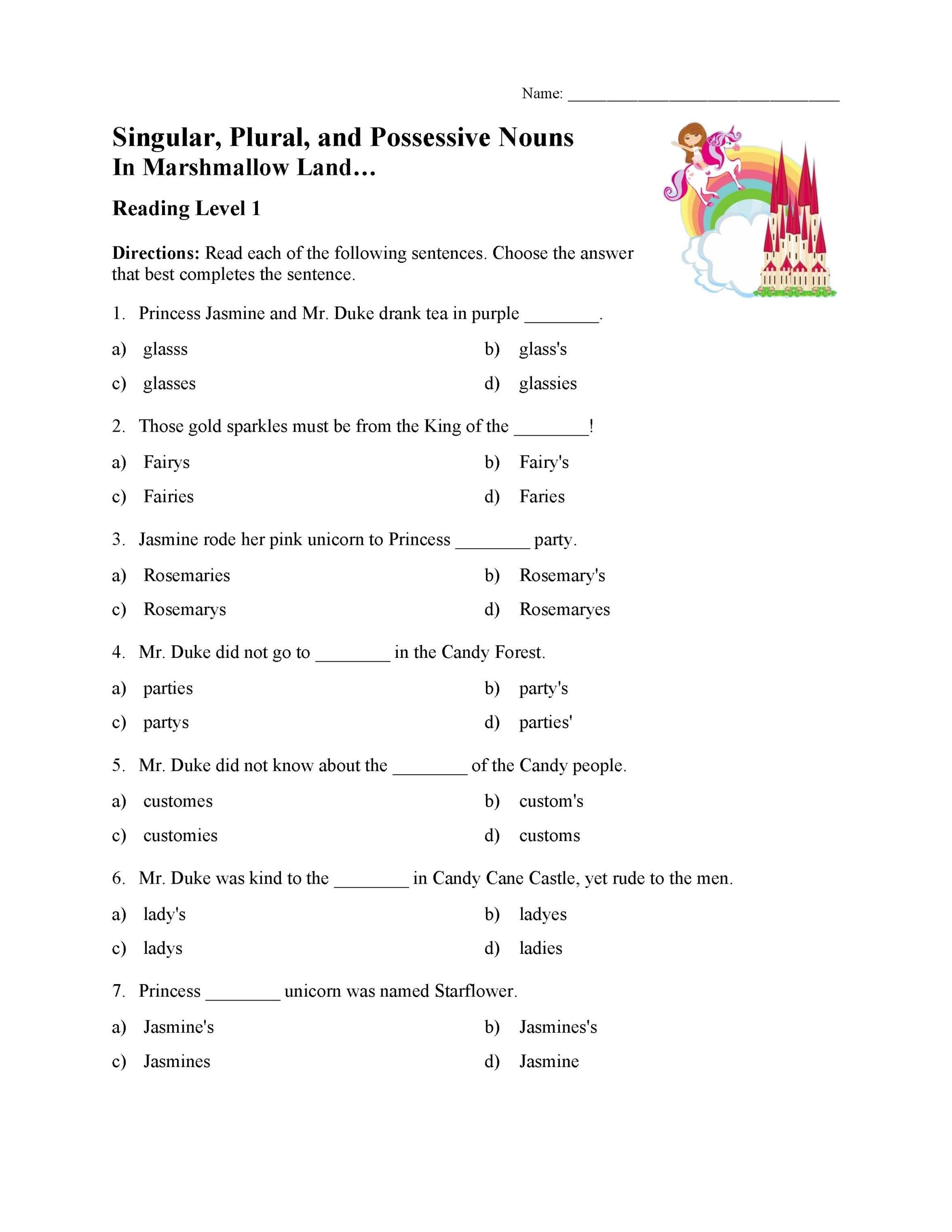
Singular Plural And Possessive Nouns Test 1 Reading Level 1 Preview
Understanding Possessive Nouns
To understand possessive nouns, it’s essential to start with the basics. Possessive nouns show ownership or relationship, and they are formed by adding an apostrophe and an ‘s’ to the base noun. For example, ‘cat’ becomes ‘cat’s’ to show that something belongs to the cat. This rule applies to most singular nouns, but there are exceptions, such as nouns that end in ‘s’, which require a slightly different approach.
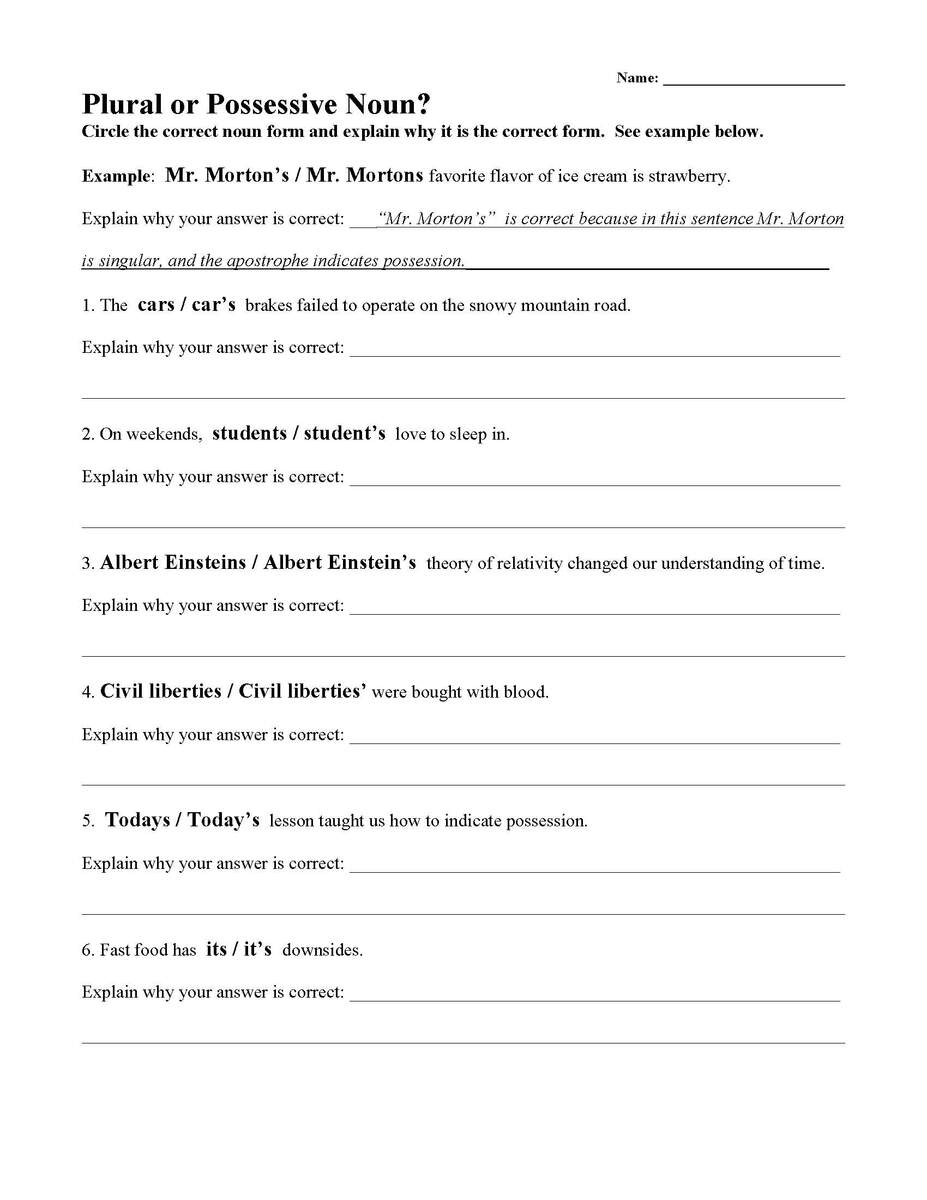
Plural Or Possessive Noun Worksheet Parts Of Speech Activity
Regular and Singular Possessive Nouns
Regular and singular possessive nouns follow a straightforward rule: add an apostrophe and an ‘s’ to the end of the noun. This applies to most nouns, regardless of whether they end in a vowel or a consonant. For instance, ‘dog’ becomes ‘dog’s’, and ‘city’ becomes ‘city’s’. However, nouns that end in ‘s’ already, like ‘bus’, can be tricky, as they require just an apostrophe after the ‘s’ to form the possessive, resulting in ‘bus”. A printable worksheet can help clarify these rules and provide ample practice.
Plural Possessive Nouns
Plural possessive nouns have their own set of rules, which can sometimes confuse learners. For nouns that are already plural and end in ‘s’, only an apostrophe is added to form the possessive. For example, ‘cats’ becomes ‘cats” to show possession. However, for plural nouns that do not end in ‘s’, such as ‘children’, both an apostrophe and an ‘s’ are added, resulting in ‘children’s’. A well-designed printable worksheet can help learners distinguish between these forms and practice using them correctly in sentences.
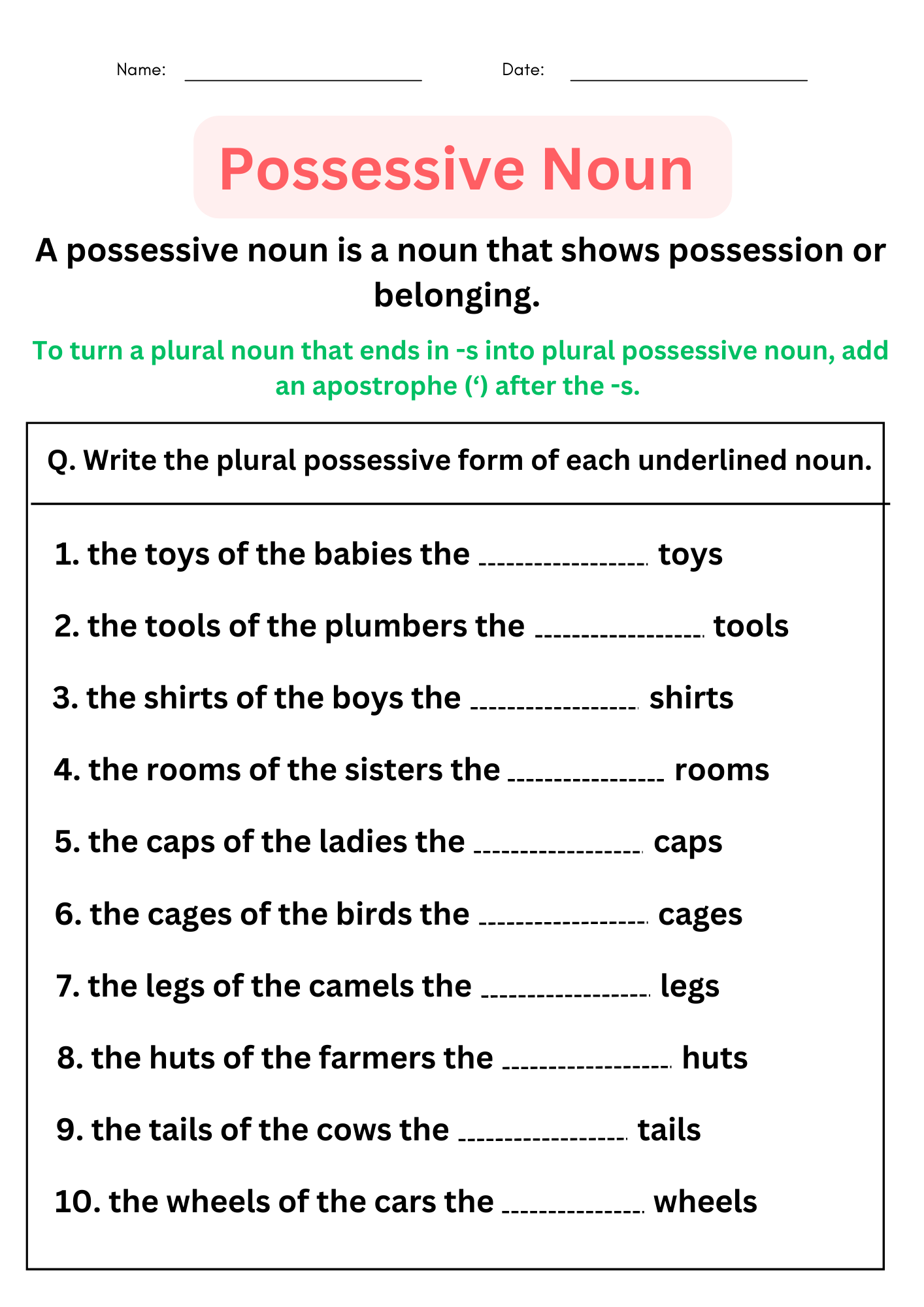
Possessive Nouns Worksheets With Answers Digital And Printable For Grade 4 5 Made By Teachers
In conclusion, mastering regular, singular, and plural possessive nouns is achievable with the right practice tools. A printable worksheet dedicated to these forms can offer a comprehensive learning experience, covering the rules, exceptions, and applications of possessive nouns. By downloading and using such a worksheet, learners can improve their understanding and usage of possessive nouns, enhancing their overall grammar skills and confidence in English.
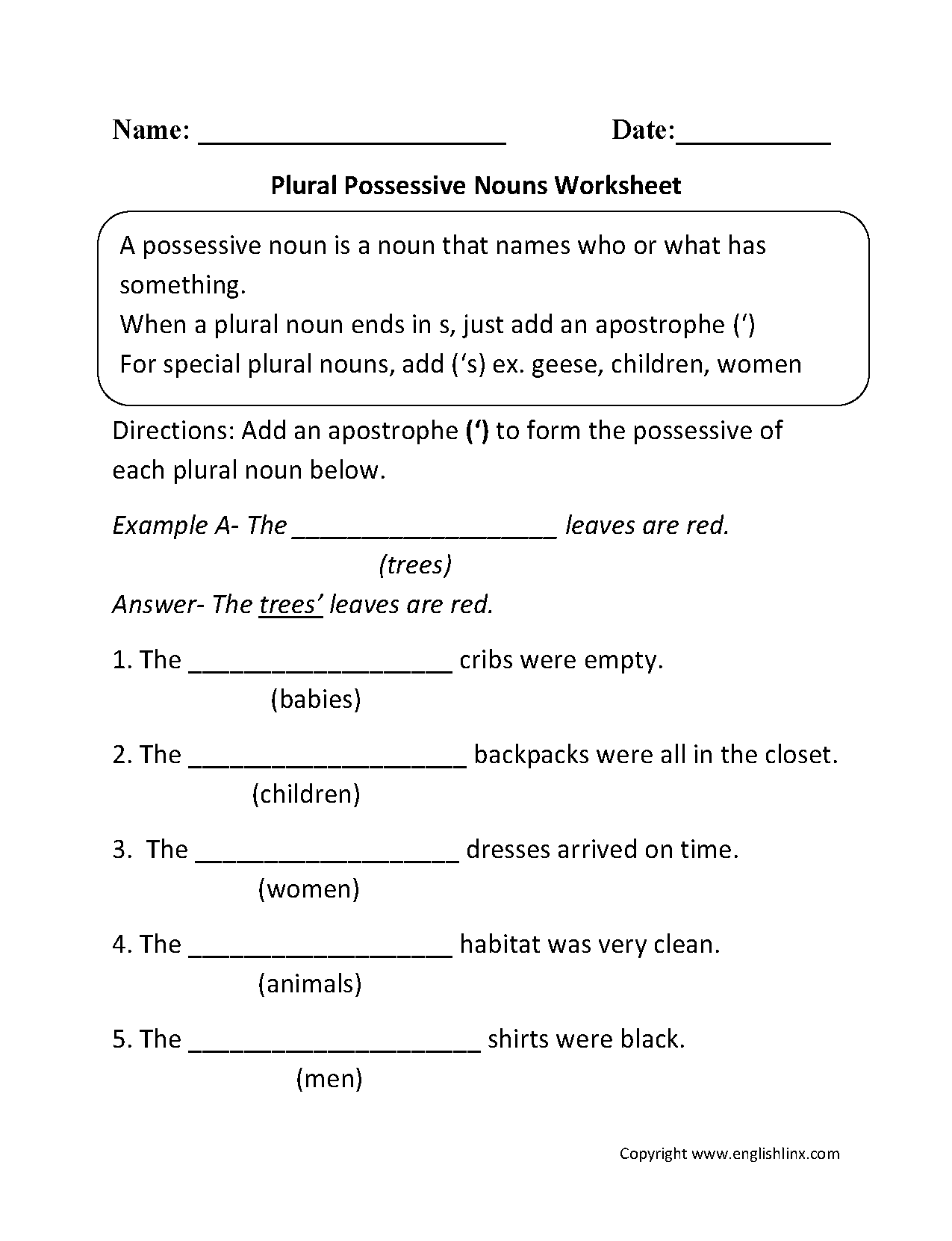
Possessive Nouns Worksheets Plural Possessive Nouns Worksheets
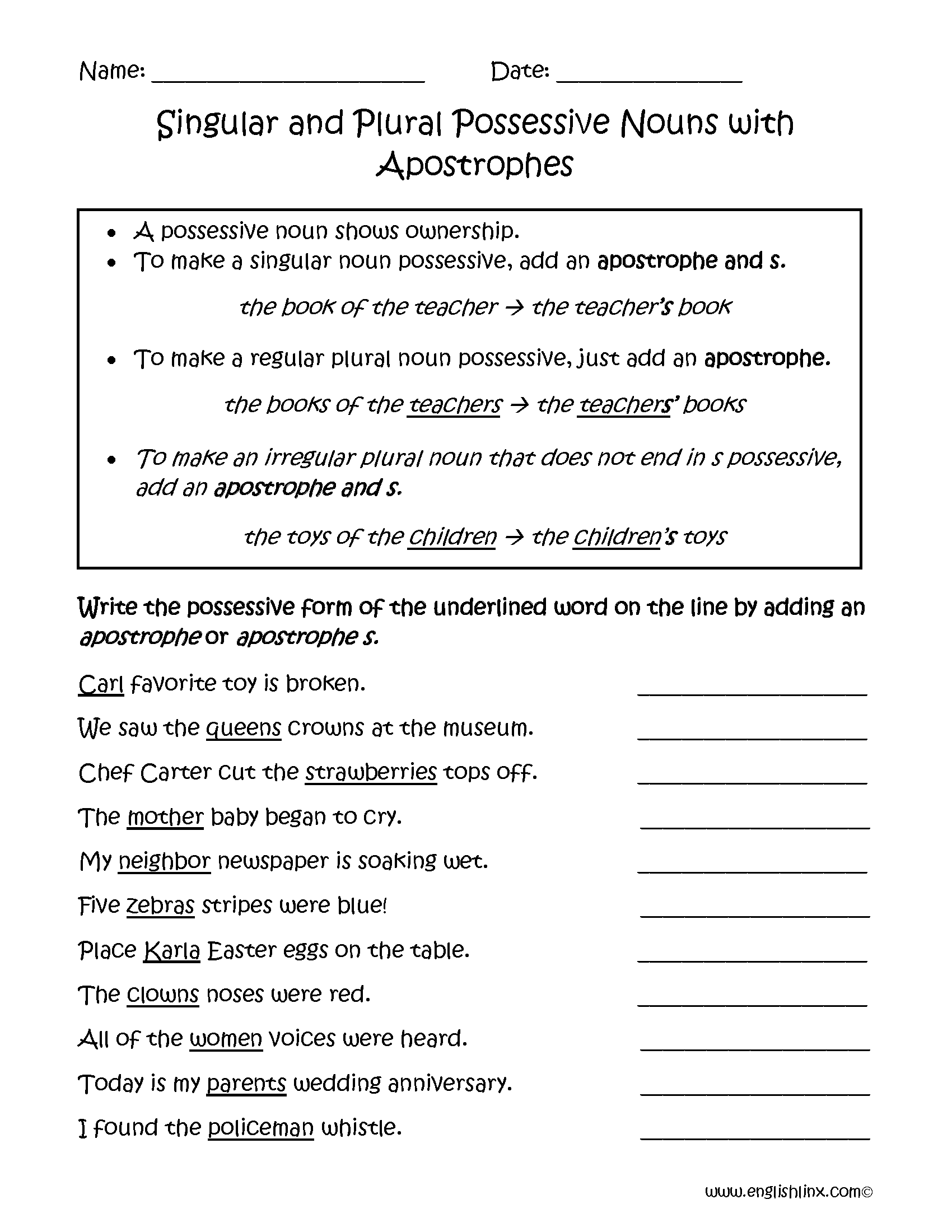
Possessive Nouns Worksheets Singular And Plural Possessive Nouns With Apostrophes Worksheets